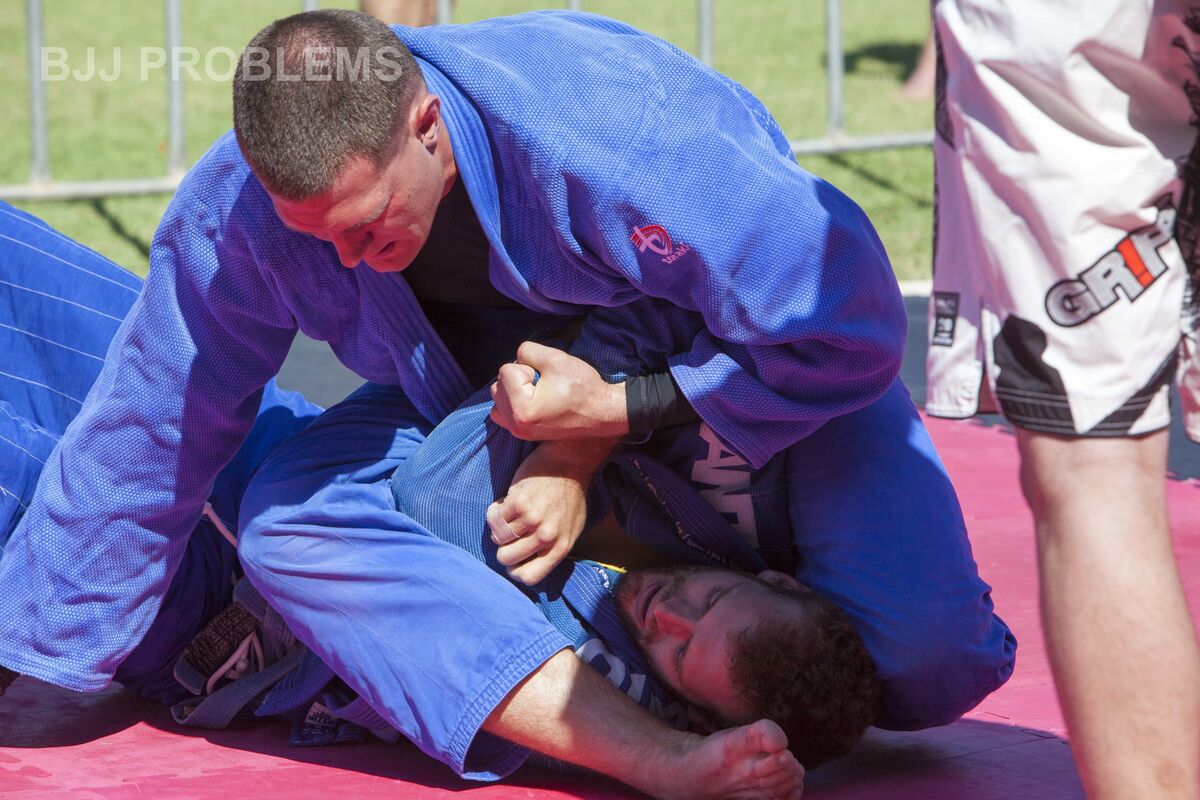
PORTLAND, ME — Brown belt Davis Henrickson, 39, a project manager at Ridgewall Architecture, has spent the last fourteen months drafting a 47-page document titled Open Mat Spatial Conduct: A Working Framework, a binder-bound treatise on etiquette that he has not mentioned to a single teammate, distributed to the head coach, or posted in any of the three group chats he belongs to at Hightide Jiu-Jitsu.
The document, housed in a black three-ring D-binder that lives beneath a stack of old NAGA brackets on the shelf below the front desk, has been read in full by zero people. Henrickson himself rereads it during lunch breaks. Purple belt Kat Ambrose once moved it to dust under the desk and later described it as “the thickest thing I’ve ever picked up that wasn’t a phone book.”
Section 3, titled “Drilling Buffer Zones,” includes hand-rendered floor diagrams in four colors — red, blue, green, and yellow — mapping the four-foot perimeter Henrickson considers the minimum acceptable spacing around any white belt during technique drills. The diagrams, drawn over the course of three weekends on vellum paper ordered from Dick Blick, are keyed to the actual tiles of the Hightide mat, which Henrickson paced off one Tuesday before class after telling his wife he was going “to get gas.”
Section 7, “The Visiting Athlete Protocol,” prescribes a three-step verbal greeting for drop-ins: an introduction, a lineage acknowledgment, and a weight-class disclosure, to be delivered within eleven seconds of first contact. Henrickson has included timing benchmarks in a sidebar, with margins of error marked in half-second increments. “The handshake should commence between 3.5 and 4.5 seconds into the interaction,” the section reads. “Eye contact thereafter.”
Section 12 prohibits “speculative grip-fighting in the warm-up corridor,” a provision Henrickson drafted after witnessing two white belts collar-drag each other near the water cooler in September. Section 18 is a full-page flowchart, produced in a free trial of Lucidchart, governing right-of-way when two pairs are scrambling toward the same patch of mat. The flowchart contains eleven decision points, three “yield” conditions, and one outcome labeled simply “Renegotiate.”
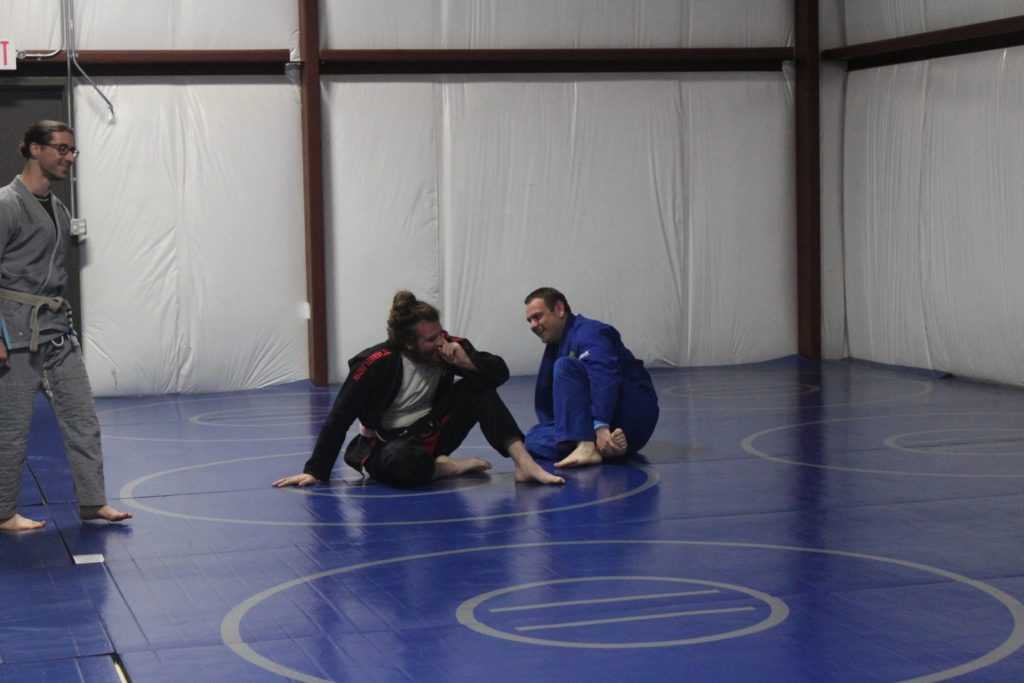
Henrickson has never enforced any provision in the document. He has never mentioned it during a class meeting, during a team dinner, or during the Saturday open mat where etiquette violations are, by his own accounting, “most concentrated.” He has not printed a second copy. He has not made a PDF. He has not emailed it to Coach Patrick Vanderhoof, who when asked about the binder replied only “Davis means well,” and then resumed rewrapping his ankle.
Sources at Hightide confirm, however, that Henrickson has been heard muttering the word “Section 4” under his breath eleven times in the last month alone, typically while watching a new student drill an americana. On March 27, according to two witnesses, Henrickson said “that’s a Section 11 violation” loudly enough that two purple belts paused mid-armdrag and stared at him for approximately six seconds before resuming. Neither belt asked what Section 11 was. Neither belt has since asked.
“He does this thing where he crosses his arms and kind of nods at the mat, like there’s a violation happening only he can see,” said blue belt Marissa Tolland, 28. “I asked him once what he was doing and he said ‘just observing.’ I think he meant it.”
Henrickson’s commitment to the project has intensified. The document has grown from 47 to 49 pages in the last three weeks, and he is currently drafting an appendix titled “Belt-Tying Etiquette During Partner Switches,” which he estimates will run another six to eight pages once he finalizes his position on whether one should face the wall or the center of the mat while retying. He has written a two-page internal memo to himself weighing both options. The memo is clipped to the inside front cover of the binder. No one has seen it.
A separate section, identified only as “Section 22 (Working),” appears to address the unused kettlebell rack near the women’s locker room. The section is unfinished. A sticky note on the page reads “revisit after reviewing rack ownership question — ask nobody.”

When pressed by a reporter for comment on the manifesto’s impact, Henrickson declined to confirm the binder exists, then asked whether the reporter had signed a visiting-athlete waiver, then recited, verbatim, the three-step greeting protocol from Section 7. He did this without breaking eye contact, which he had initiated at 3.8 seconds, a timing he later described in a private conversation with himself as “acceptable, if tight.”
At press time, Henrickson was standing at the edge of the mat during a live round, watching a blue belt sprawl into an open guard from a standing position. He did not intervene. He did not speak. He adjusted his belt, glanced once at the front desk, then wrote a small note on an index card he kept in his back pocket. The card, when later recovered by custodial staff and returned to the lost and found, read: “Section 19?”
Coach Vanderhoof, informed of the note, asked if Henrickson wanted to talk about it. Henrickson declined. Coach Vanderhoof then asked if Henrickson wanted to teach a fundamentals class sometime. Henrickson said he would think about it. He has been thinking about it for eleven months.
The binder, as of publication, remains beneath the front desk. It is now the second-heaviest object at Hightide Jiu-Jitsu, behind only the kettlebell rack Section 22 specifically addresses. Henrickson is expected to complete the belt-tying appendix sometime in late May, at which point the document will be relocated to the same shelf, returned to the same position, and read by the same number of people.